Friday, April 29, 2011

APOD 4.5 and Zooniverse progress

Zooniverse continued with Galaxy zoo Hubble. No changes there and no days missed. Haven't exactly coutned the days but I should be where I need to be on that.


I however have not worked on the moon zoo project, although the craters here at the southern pole have been given some attention.
  See Explanation.  Clicking on the picture will download
the highest resolution version available.
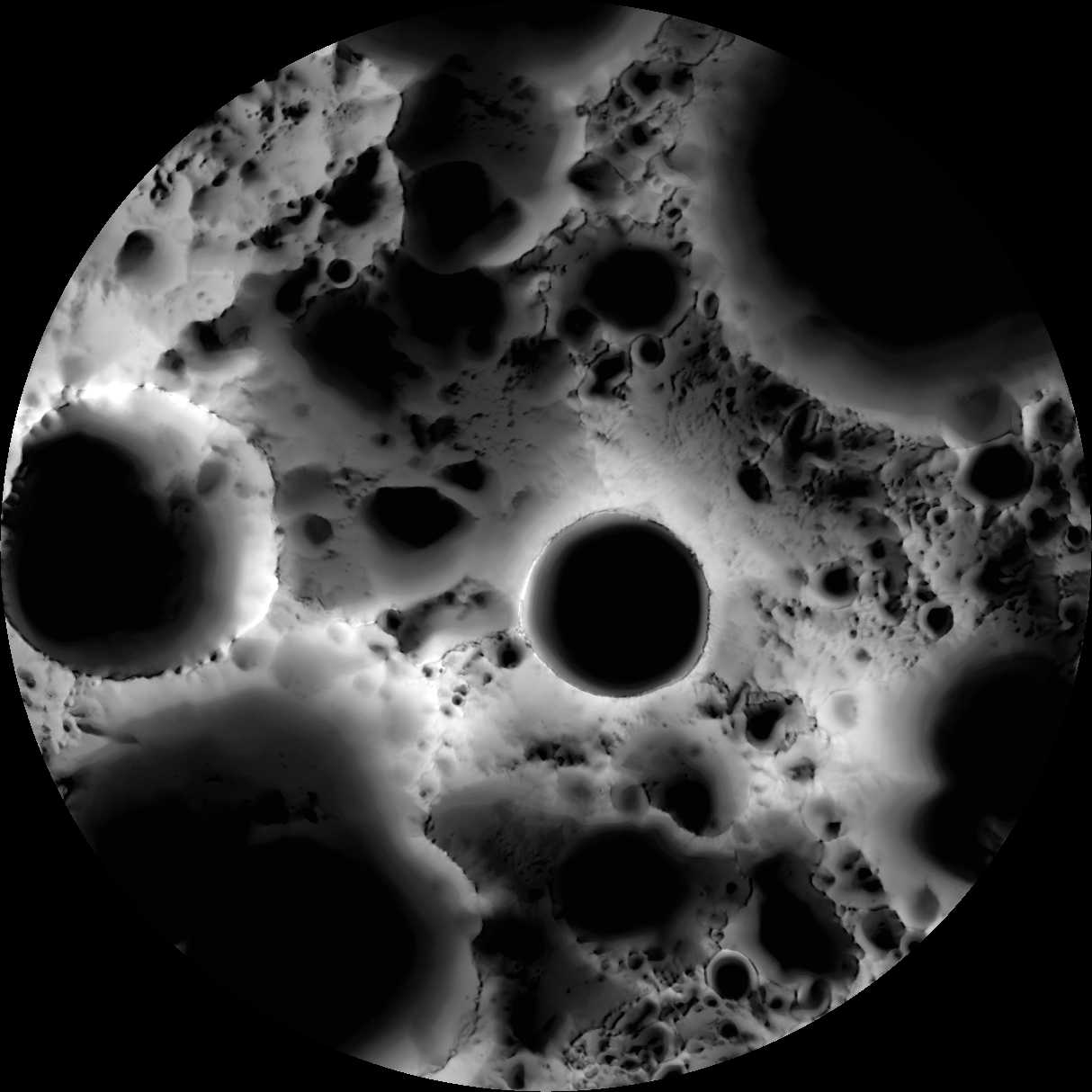
The picture shows how much sunlight the different parts of the pole get in a 6 moon-day (6 earth-month) period. The mounts are almost completely white as they are in a state of eternal day, Where as the craters never get any direct light. The crater in the middle is very close to the actual southern pole, withing 9 degrees or so, and the lunar equator is very close to the ecliptic plane, the amount of light at the poles is constant. Perhaps the mountains in there area would be ideal locations for solar power arrays. Assuming they have protection from falling rocks.


Monday, April 25, 2011

APOD 4.4 and zooniverse progress

zooniverse: Continued working in Galaxy zoo Hubble, classifying galaxies. Most of which are smooth ellipses but I occasionally find an interesting spiral galaxy. No work done for zooniverse outside of class time. I may or may not switch to a different zooniverse project soon. We'll see.

Now for a view from Everest. This is probably the only APOD I've done of anything under Earth's atmosphere. Any planet-side images I've chosen are from other worlds (or artists' renditions of thereof). But to say that this view is nice is a bit of an understatement.
See Explanation.  Clicking on the picture will download
the highest resolution version available.
The clouds around the mountain look like fog from this vantage point, 8.85 Kilometers up. This altitude is about the maximum that any international aircraft will reach. The air is surely thin, but what a view of the mountains. I wouldn't hop on down so quickly though. In its country, Nepal, the mountain is referred to as Sagarmontha, or "the forehead of the sky" which sounds rather fitting.

Friday, April 15, 2011

APOD 4.3 and zooniverse progress

Zooniverse: continued working on the milky way project, drawing bubbles as I went. Unfortunately this grew old halfway through the week (since I would only find a bubble every third image, which I suppose would be an indicator of the wealth of empty space in the Milky Way.) I have now begun working on one of the galaxy zoo projects, here observing galaxies and describing their appearance.

50 years ago, Yuri Alexseyevich Gagarin was the first man sent up, and he described the image he saw before him as he orbited.
See Explanation.  Clicking on the picture will download
the highest resolution version available.
The international space station has a view that looks very much like what he described. The sky was black, the earth was bluish, and he could see clearly. Yuri survives a prototype vessel to reach orbit, but died in a crash of a Mig jet during a training flight. Ironic and unfortunate. He received a hero's funeral, ashes safely tucked away in the walls of the Kremlin. As for his achievements, the man became a legend for this journey to space. It's sad to think of it now. 50 years ago scientific achievement meant sending a man to space. Now it means building a smaller ipod.

Friday, April 8, 2011

APOD 4.2 and Zooniverse progress

As For "Zooniverse," I have been working on the milky way project and will likely continue doing so. I spy in space. Now on to the ASTRONOMY PICTURE OF THE DAAAAAY:

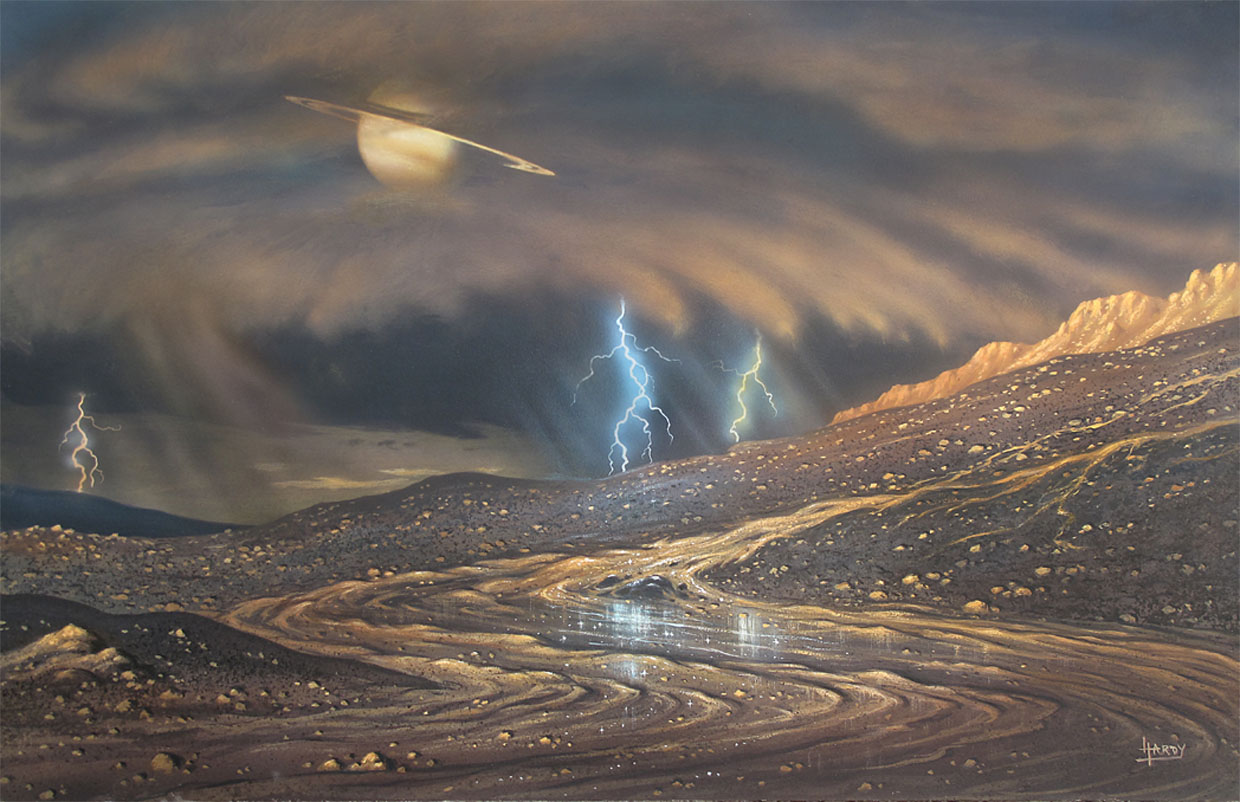
Raindrops are falling, on Titan. The -290 degree atmosphere on Titan allows there to be precipitation in the form of Liquid methane. The storms above Saturn's largest moon may also have lightning from the Nitrogen rich atmosphere.
See Explanation.  Clicking on the picture will download
the highest resolution version available.
This is of course an artist's illustration, but it is believed to be close to what we would see. The rain clouds were found via the Cassini spacecraft. This however is nothing compared to the ground breaking discovery in 2005 of Water on Mars. The water and the nutrient rich surface may have sustained life

......before it melted.

Thursday, March 31, 2011

APOD 4.1

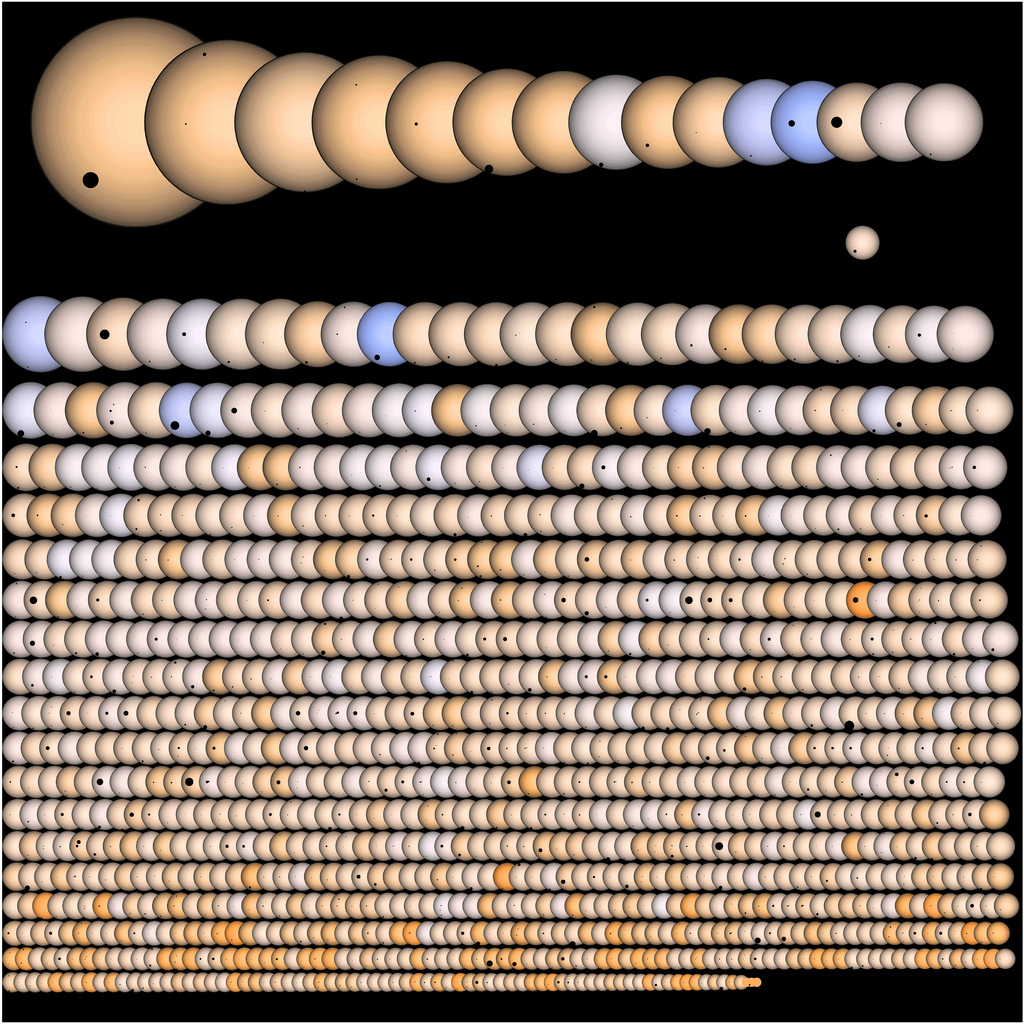
the Kepler Spacecraft has been working for some time to find exoplanets. (or Extrasolar planets, if you prefer) Since it's mission started in 2009, it has found 1,235 planets using the transits system.
See Explanation.  Clicking on the picture will download
the highest resolution version available.
The above image is a collection of simulated pictures. Kepler looks for the slight, regular dimming of a star as a planet passes over it. The images shown actually show the silhouette of a passing planet, rather than Kepler seeing a slightly dimmer dot. Some of the pictured stars actually have more than planet passing their star, including one with three worlds, 3rd row, fourth down. Our sun is shown for comparison under the first row of stars. What confuses me is the Blue stars among the larger crowd. I though Blue giants were at least 8 times the mass of the sun, but they don't appear that much bigger, especially the blue stars in the second column. Also, I blame no one if they say the first star in the first column looks like an upside-down Pacman. Actually, speaking of that Star, it's planet looks like it's almost as big as the sun if these are to scale. Could it be a binary companion? the mythic black dwarf if it's not giving off light? Or is it just one truly massive planet?

Tuesday, March 29, 2011

Astronomy Night Observation

Identified all the constellations with stars int he winter "G," as well as Ursa Major and Leo. Also saw the Orion nebula through one of the telescopes.

Monday, March 28, 2011

APOD 3.8

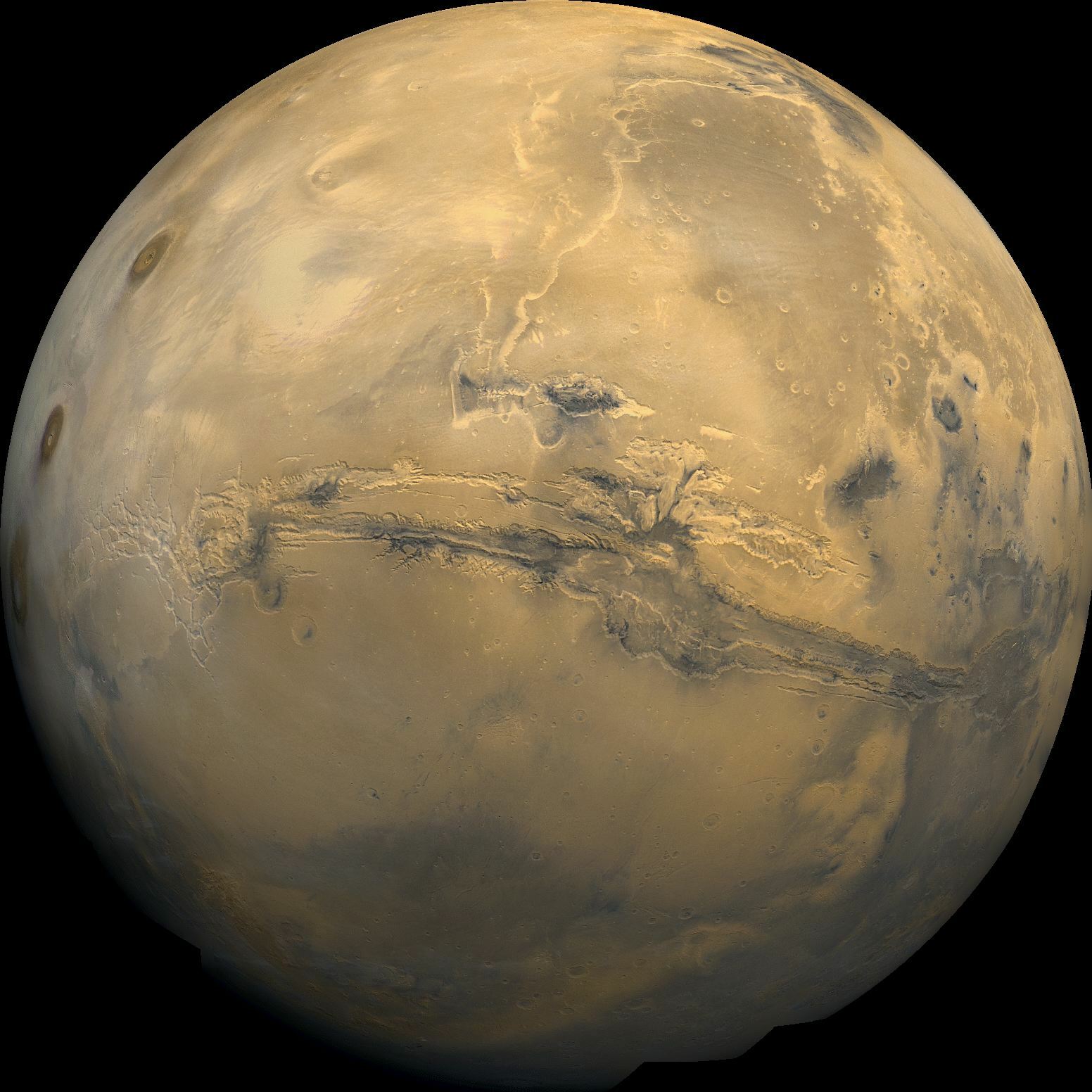
The Valles Marineris is the largest canyon in the solar system, 3,000 kilometers long.
See Explanation.  Clicking on the picture will download
the highest resolution version available.
Believed to have started as a crack as the planet was cooling, the massive gash in the surface is 600 kilometers across at its widest point, and stretches 8 kilometers deep. The earth's grand canyon is less than a third of its length, only 1.8 kilometers deep, and a 20th of its girth. to peer down a chasm so deep would certainly be intimidating. This mosaic was build from images taken in the 70 by the viking orbiter.